Chinese herbal medicine is part of a larger healing system called traditional Chinese medicine (TCM), which also includes acupuncture, massage dietary advice and exercise.
The underlying principles of TCM are very different from traditional Western notions about health, illness and the workings of the body. Chinese herbs are prescribed to normalize imbalanced energy, or Qi (pronounced ‘chee’), that runs through invisible meridians in the body. Whether or not the philosophy is believed, studies have shown Chinese herbal medicines to be successful in treating a range of disorders, particularly gynecological and gastrointestinal disorders.
Yin and Yang
The ancient Chinese proposed that every living thing is sustained by a balance of two opposing forces of energy, called Yin and Yang. Together, they make up the life essence, or Qi – a type of energy that flows through the body via invisible channels called meridians. Half of certain organs and meridians are governed by Yin and the other half by Yang. When Yin and Yang are out of balance in the body, this causes a blockage of Qi and a subsequent illness. Yin and Yang imbalances can be caused by stress, pollution, poor diet, emotional upsets or infection. For diagnostic purposes, Yin and Yang are further subdivided into interior and exterior, hot and cold, deficiency and excess.
The five elements in Chinese herbal medicine
The TCM philosophy proposes that everything including organs of the body – is composed of the five elements: fire, earth, metal, water and wood. The herbs are similarly classified into the five tastes – sweet, salty, bitter, pungent and sour – which correspond to the five elements, for example, since the skin is a metal element Yang organ, it would be treated with a pungent herb.
Herbs used in Chinese medicine
Chinese herbal medicines are mainly plant based, but some preparations include minerals or animal products. They can be packaged as powders, pastes, lotions or tablets, depending on the herb and its intended use. Different herbs have different properties and can balance particular parts of the body. Prescribing a particular herb or concoction of herbs means the practitioner’s diagnosis has to take into account the state of the patient’s Yin and Yang, and the elements that are governing the affected organs.
Additional treatment and advice
Your practitioner might advise you to make specific changes in your diet, such as avoiding spicy foods or alcohol. Foods are believed to either ‘heat’ or ‘cool’ the constitution, making dietary changes an important part of the healing process. Acupuncture might also be used to treat disrupted Qi.
Special considerations
Herbs can act on the body as powerfully as pharmaceutical drugs and should be treated with the same caution and respect. Some herbs can be toxic in high doses, while others can cause allergic reactions. Make sure your practitioner is fully qualified. Never abandon your regular medication or alter the dose without the knowledge and approval of your doctor.
Things to remember
- Chinese herbal medicine is part of a larger healing system called Traditional Chinese Medicine.
- Herbs are prescribed to restore energy balance to the opposing forces of energy – Yin and Yang – that run through invisible channels in the body.
- Herbs can act on the body as powerfully as pharmaceutical drugs and should be treated with the same caution and respect.
What are herbal therapies?
Herbal therapy, next to dietary therapy, is perhaps the most widely used Traditional Chinese Medicine (TCM) treatment modality. TCM relies on herbal therapies both for the treatment of illness and in the optimization of health and prevention of disease.
There are 5,767 medicinal substances currently in use, including plant, animal, and mineral substances. The Materia Medica (book on TCM medicinal substances) includes information on the traditional uses, dosages, and contra-indications for each substance, as well as any available information on drug interactions, and any conventional medical research that has been published.
TCM assesses medicinal substances for their effects on particular vital substances, their resonance with particular Zang Fu organ systems, the channels of the Jing Luo system into which the substance is said to enter, and the pathogenic factors and patterns of disharmony that the substance is known to address.
How do TCM practitioners use formulations?
TCM practitioners most often use two or more substances in Chinese medicinal formulations to create a balanced, synergistic effect that reflects the holistic nature of the diagnosis.
Although there are literally thousands of traditional herbal formulas for just about every condition imaginable, a formula is almost always modified by the TCM practitioner to suit the subtle nuances of the condition and constitution of the patient, making each formulation highly individualized.
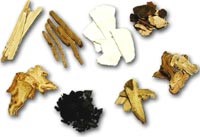
Chinese medicinal formulations are prepared in a number of different ways:
- Chinese herbal decoctions. The most traditional method of preparing an herbal formula in China, decoctions can involve lengthy preparation and result in “teas” infamous for their strong taste and aroma. For these reason decoctions are not as popular or as widely used in the west.
- Herbal powders, which can be mixed with hot water to make a tea, are more convenient to prepare and use, and are not as pungent as traditional decoctions.
- Chinese Patent Formulas are pre-made herbal formulations in pill or tablet form and are perhaps the most widely used form of Chinese herbal medicine outside of China.
- Syrups, which are soothing preparations for coughs and sore throat, are also a convenient way to administer herbal formulations to children.
- Liniments, salves, compresses and plasters, which are used for external application. Herbal therapy, next to dietary therapy, is perhaps the most widely used TCM treatment modality. TCM relies on herbal therapies both for the treatment of illness and in the optimization of health and prevention of disease.
By appointment only: (310) 579-0995

| Monday | Closed |
| Tuesday | Closed |
| Wednesday | 8:00 AM – 6:00 PM |
| Thursday | 8:00 AM – 6:00 PM |
| Friday | Closed |
| Saturday | 8:00 AM – 6:00 PM |
| Sunday | Closed |
 Rigpa Wellness